Para os grupos que ainda não o fizeram, informa-se podem levantar as maquetes no gabinete do funcionário do pavilhão Carlos Ramos. Recomenda-se que o façam com brevidade. Obrigado.
Boas férias a todos!
Tuesday, June 25, 2013

Sunday, June 2, 2013
NOTIFICAÇÃO
Pede-se a todos os alunos que ainda não responderam ao questionário e aos grupos que ainda não publicaram o material da apresentação que o façam com urgência, por favor.
https://docs.google.com/forms/d/159sDt3qaKpotly1L9vxwTjM4Nya-je4efo1_MbcOI30/viewform
Obrigado,
pc.
https://docs.google.com/forms/d/159sDt3qaKpotly1L9vxwTjM4Nya-je4efo1_MbcOI30/viewform
Obrigado,
pc.
Monday, May 27, 2013
Questionário
Pede-se a todos os estudantes que respondam ao seguinte questionário. Obrigado.
https://docs.google.com/forms/d/159sDt3qaKpotly1L9vxwTjM4Nya-je4efo1_MbcOI30/viewform
https://docs.google.com/forms/d/159sDt3qaKpotly1L9vxwTjM4Nya-je4efo1_MbcOI30/viewform
Friday, May 24, 2013
P03 —> Notificação
Relembram-se todos os grupos que as apresentações deverão ter duração de 5 minutos (2 de tolerância). Relembra-se ainda que, tal como comunicado na aula anterior, os grupos cuja a apresentação ultrapasse os 6 minutos sofrerão uma penalização na avaliação. Os que ultrapassarem os 7 minutos sofrerão uma maior penalização, sendo que a apresentação será interrompida no exato momento. Do mesmo modo, informa-se que a apresentação deverá ser programada para 5 minutos e não para 4, 3 ou menos.
Bom trabalho a todos,
pc.
Bom trabalho a todos,
pc.
Monday, May 20, 2013
P03 —> Horário de Apresentações
Pede-se que o seguinte horário seja respeitado com rigor, para que as apresentações decorram às horas estipuladas. No caso de ausência a respetiva avaliação será igual a 0 (zero), sendo que o grupo seguinte apresentará antecipadamente.
Caso haja necessidade, poderão alterar a hora da apresentação trocando com outro grupo, informando-me simultaneamente (por email) da respetiva alteração.
Devido ao número de apresentações agendadas, a aula estender-se-á para além das duas horas habituais, até às 18:50 aproximadamente.
Recomenda-se que os grupos levem os seus computadores com as suas apresentações devidamente preparadas, e com os adaptadores adequados para VGA (projetor). Recomenda-se ainda que testem o equipamento antes da apresentação final.
Aproveito ainda para informar todos os estudantes que estarei disponível para atendimento e acompanhamento dos projetos nesta quarta-feira (22/05) das 14:00 às 16:00, mediante marcação por email (com antecedência).
Bom trabalho a todos,
pc.
———
G1.1—16:10
Bárbara Ferreira
Inês Gonçalves
Joana Sousa
Mariana Malhão
G1.2—16:20
Ana Catarina Sousa
Carolina Faria
Diana Magalhães
Maria Gonzalez
Maria Inês Freitas
G1.3—16:30
Helena Almeida
Rodrigo Galvão
Manuel Ramos
Ivo Torres
G2.1—16:40
Leonardo Pais
Gustavo Seguro
Mariana Almeida
João Alarcão
G2.2—16:50
Marta Novo
Tiago Andrade
Vasco Tudela
Ana Caspão
G2.3—17:00
Filipa Alvim de Castro
Marina Pereira
Bruno Nogueira
G2.4—17:10
Alexandra Sousa
Filipa Namorado
Joana Neves
João Carreiro
G2.5—17:20
Daniela Gomes
Sérgio Gomes
Sofia Silva
G2.6—17:30
Jennifer Moleiro
Joana Campos
Sofia de Sousa
Ana Margarida Pereira
G2.7—17:40
Rui Rocha
Luís Cepa
Hugo Ferreira
Ana Rita Almeida
G2.8—17:50
Helena Mota
Maria Portela
Joana Barros
G2.9—18:00
Bruno Miguel Dias Pacheco
Paulo Guilherme Souva Barrios
Monica Sofia Bico Correia
G2.10—18:10
Ana Filipa Ferreira
Arthur Silveira de Veras
Sofia Santos
Telma Ferreira
Zita Moura
G3.1—18:20
Carla Guedes
Vanessa Carvalho
Catarina Queirós
G3.2—18:30
Sílvia Raquel Cerqueira
Maria Fernandes
Maria Inês Lobo
Marta Sofia Graça
Caso haja necessidade, poderão alterar a hora da apresentação trocando com outro grupo, informando-me simultaneamente (por email) da respetiva alteração.
Devido ao número de apresentações agendadas, a aula estender-se-á para além das duas horas habituais, até às 18:50 aproximadamente.
Recomenda-se que os grupos levem os seus computadores com as suas apresentações devidamente preparadas, e com os adaptadores adequados para VGA (projetor). Recomenda-se ainda que testem o equipamento antes da apresentação final.
Aproveito ainda para informar todos os estudantes que estarei disponível para atendimento e acompanhamento dos projetos nesta quarta-feira (22/05) das 14:00 às 16:00, mediante marcação por email (com antecedência).
Bom trabalho a todos,
pc.
———
G1.1—16:10
Bárbara Ferreira
Inês Gonçalves
Joana Sousa
Mariana Malhão
G1.2—16:20
Ana Catarina Sousa
Carolina Faria
Diana Magalhães
Maria Gonzalez
Maria Inês Freitas
G1.3—16:30
Helena Almeida
Rodrigo Galvão
Manuel Ramos
Ivo Torres
G2.1—16:40
Leonardo Pais
Gustavo Seguro
Mariana Almeida
João Alarcão
G2.2—16:50
Marta Novo
Tiago Andrade
Vasco Tudela
Ana Caspão
G2.3—17:00
Filipa Alvim de Castro
Marina Pereira
Bruno Nogueira
G2.4—17:10
Alexandra Sousa
Filipa Namorado
Joana Neves
João Carreiro
G2.5—17:20
Daniela Gomes
Sérgio Gomes
Sofia Silva
G2.6—17:30
Jennifer Moleiro
Joana Campos
Sofia de Sousa
Ana Margarida Pereira
G2.7—17:40
Rui Rocha
Luís Cepa
Hugo Ferreira
Ana Rita Almeida
G2.8—17:50
Helena Mota
Maria Portela
Joana Barros
G2.9—18:00
Bruno Miguel Dias Pacheco
Paulo Guilherme Souva Barrios
Monica Sofia Bico Correia
G2.10—18:10
Ana Filipa Ferreira
Arthur Silveira de Veras
Sofia Santos
Telma Ferreira
Zita Moura
G3.1—18:20
Carla Guedes
Vanessa Carvalho
Catarina Queirós
G3.2—18:30
Sílvia Raquel Cerqueira
Maria Fernandes
Maria Inês Lobo
Marta Sofia Graça

Sunday, May 19, 2013
10 Commandments Of Creativity
I. THOU ART CREATIVE
II. THOU SHALT GET OUT OF THY COMFORT ZONE
III. THOU SHALT CHANGE THY ENVIRONMENT
IV. THOU SHALT TRY DIFFERENT THINGS
V. THOU SHALT HONOR THY INTUITION
VI. THOU SHALT SEEK SEVERAL OPTIONS
VII. THOU SHALT JUSTIFY THY EFFORTS
VIII. THOU SHALT SEEK INPUTE FROM OTHERS
IX. THOU SHALT BELIEVE THOU WILT SUCCEED
X. THOU SHALT TAKE ACTION
At http://designtaxi.com/article/101835/10-Commandments-Of-Creativity/.
II. THOU SHALT GET OUT OF THY COMFORT ZONE
III. THOU SHALT CHANGE THY ENVIRONMENT
IV. THOU SHALT TRY DIFFERENT THINGS
V. THOU SHALT HONOR THY INTUITION
VI. THOU SHALT SEEK SEVERAL OPTIONS
VII. THOU SHALT JUSTIFY THY EFFORTS
VIII. THOU SHALT SEEK INPUTE FROM OTHERS
IX. THOU SHALT BELIEVE THOU WILT SUCCEED
X. THOU SHALT TAKE ACTION
At http://designtaxi.com/article/101835/10-Commandments-Of-Creativity/.
Friday, May 17, 2013
How to Give a Successful Ignite Presentation
"You will screw up when you rehearse. Don’t get frustrated. This is EXACTLY what you want. In fact, if you don’t screw up, you’re in trouble. The point of practice is to learn to recover from mistakes. So when you make a mistake, don’t start over. Continue with that rehearsal to the end of the presentation. Make adjusts and then run through the entire presentation again."
"Know Your Key Moments. Use Them as Anchors — Whether it is a joke that you’ve planned or a poignant moment when you want to move the audience, know where they are in the slides and as you practice improvisational editing, make sure you edit in a way that keep those key moments intact."
"Feel free to take the edge off a little, but you’re going to need to be sharp to be the best improvisational editor you can."At http://userfirstweb.com/328/successful-ignite-presentations/
Giving Lightning Talks
"Remember, you're talking to an intelligent crowd here who can normally move from A to B without having to be handled through each and every step."
"One of the biggest mistakes people make about the details is misunderstanding that just because they've put something on the slides it means that they have to explain it."
"When it comes down to it there's only one way to make sure that your talk will fit in the time-slot, and that's to practice it. Read it out aloud several times. Present it to the cat. Try to convince your colleague/flatmate/significant other to listen to it."
"Preparation is everything."
"Set up and load all the apps you're going to use first — no one wants to be caught on stage in an awkward silence with nothing to say while they wait the 20 seconds it takes Mozilla to load. While you're at it don't forget to close down instant-messenger clients, calendaring apps, and anything else that might randomly pop up dialogs when you're trying to speak."
"During a lightning talk it's vital that you keep your rapport with the audience, rather than diverting your attention to the computer every slide change. Unlike a 40-minute talk, you don't have time to take breaks between slides."
"Even when you take every precaution, you'll still encounter unexpected problems. Your demo won't work. You'll discover you're using a slightly older version of the slides. Your software will use the wrong font. The computer will burst into flames and burn down the venue. Remember that you don't have time to recover from any of these problems. Even if it takes you 30 seconds to locate a new version of the slides and remember where you were, that's a tenth of your talk gone. More importantly, the audience has lost interest while you're doing this and has slipped into their daydream world where you'll have to work really hard to reacquire their attention."
At http://www.perl.com/pub/2004/07/30/lightningtalk.html.
"One of the biggest mistakes people make about the details is misunderstanding that just because they've put something on the slides it means that they have to explain it."
"When it comes down to it there's only one way to make sure that your talk will fit in the time-slot, and that's to practice it. Read it out aloud several times. Present it to the cat. Try to convince your colleague/flatmate/significant other to listen to it."
"Preparation is everything."
"Set up and load all the apps you're going to use first — no one wants to be caught on stage in an awkward silence with nothing to say while they wait the 20 seconds it takes Mozilla to load. While you're at it don't forget to close down instant-messenger clients, calendaring apps, and anything else that might randomly pop up dialogs when you're trying to speak."
"During a lightning talk it's vital that you keep your rapport with the audience, rather than diverting your attention to the computer every slide change. Unlike a 40-minute talk, you don't have time to take breaks between slides."
"Even when you take every precaution, you'll still encounter unexpected problems. Your demo won't work. You'll discover you're using a slightly older version of the slides. Your software will use the wrong font. The computer will burst into flames and burn down the venue. Remember that you don't have time to recover from any of these problems. Even if it takes you 30 seconds to locate a new version of the slides and remember where you were, that's a tenth of your talk gone. More importantly, the audience has lost interest while you're doing this and has slipped into their daydream world where you'll have to work really hard to reacquire their attention."
At http://www.perl.com/pub/2004/07/30/lightningtalk.html.
Thursday, May 16, 2013
“Death by PowerPoint”
“Death by PowerPoint” is a criticism of slide-based presentations referring to a state of boredom and fatigue induced by information overload during presentations such as those created by the Microsoft application PowerPoint. (…) “PowerPoint hell” is the tedium some people report on sitting through PowerPoint visual presentations that are too long and complex, making excessive use of the software’s features and when the presenter just reads from the slides.At http://en.wikipedia.org/wiki/Death_by_PowerPoint#.22Death_by_PowerPoint.22.
Sunni Brown: Doodlers, unite!
Studies show that sketching and doodling improve our comprehension -- and our creative thinking. So why do we still feel embarrassed when we're caught doodling in a meeting? Sunni Brown says: Doodlers, unite! She makes the case for unlocking your brain via pad and pen.
Ignites, Lightning Talks, and PechaKuchas
Ignite is a global event, organized by volunteers, where participants are given five minutes to speak about their ideas and personal or professional passions, accompanied by 20 slides. Each slide is displayed for 15 seconds, and slides are automatically advanced. (…) The presentations are meant to "ignite" the audience on a subject, i.e. to generate awareness and to stimulate thought and action on the subjects presented.http://en.wikipedia.org/wiki/Ignite_(event)
A Lightning talk is a short presentation given at a conference or similar forum. Unlike other presentations, lightning talks last only a few minutes and several will usually be delivered in a single period by different speakers.http://en.wikipedia.org/wiki/Lightning_Talk
http://en.wikipedia.org/wiki/PechaKuchaPechaKucha or Pecha Kucha (Japanese: ペチャクチャ, IPA: [petɕa ku͍̥tɕa],[1] chit-chat) is a presentation methodology in which 20 slides are shown for 20 seconds each (six minutes and 40 seconds in total). The format, which keeps presentations concise and fast-paced, powers multiple-speaker events called PechaKucha Nights (PKNs).[2][3]
PechaKucha Night was devised in February 2003[4][5] by Astrid Klein and Mark Dytham of Tokyo's Klein-Dytham Architecture (KDa), as a way to attract people to SuperDeluxe, their experimental event space in Roppongi, and to allow young designers to meet, show their work, and exchange ideas.
Tuesday, May 14, 2013
Your Mom Hates Dead Space 2
For the advertising campaign, 200 women were selected for their conservative values and lack of familiarity with video games. Their reactions to a screening of the game were featured in EA's web and TV advertisements with the campaign slogan called "Your Mom Hates Dead Space 2".
The campaign was criticized as sexist and reinforcing stereotypes against female and older gamers. As the game is M rated and only 17+ can purchase it, others thought the advertisements were pointless and would hurt market share. Mary Elizabeth Williams of Salon.com wrote: "The video game's campaign hinges on a unique premise – one that ignores how much the culture of gaming has changed." The Approval Matrix published by New York Magazine placed the campaign in the Lowbrow but Brilliant quadrant.
On the other hand, notable voices in the video game industry defended the campaign. Kotaku's Brian Crecente asked "Are that many people really taking the Dead Space 2's moms campaign that literally? When did gamers become so humorless?" Steven Hodson of The Inquisitr wrote, "Granted it took a lot of guts for EA to even go down this road but the idea of pulling in 200 middle-aged moms into an individual focus group situation to evaluate a new game – title unknown – was awesome."
More info at http://en.wikipedia.org/wiki/Dead_Space_2#Advertising.
Monday, May 13, 2013
Notificações
Encontra-se publicada na respectiva página a proposta de trabalho 3.
Relembram-se todos os estudantes que poderão entregar uma versão melhorada da proposta de trabalho 2 até ao fim do dia 14/05/2013 (terça-feira).
Para a aula de dia 20/05, convidam-se os grupos de trabalho a trazerem a sua apresentação minimamente delineada e projetada e os protótipos mais finalizados.
Na próxima aula, às 16:00 em ponto, contaremos com a presença da Joana Sobral que fará uma apresentação sobre o seu trabalho. A Joana é mestre em Design da Imagem, tendo elaborado a sua dissertação Portugalidade Em Contextos Lúdicos: Repertórios da identidade nacional portuguesa aplicados a artefactos digitais interactivos video-jogáveis. Publicou o jogo Play Fátima, e é editora da Pangrama.

Bom trabalho a todos,
pc.
Relembram-se todos os estudantes que poderão entregar uma versão melhorada da proposta de trabalho 2 até ao fim do dia 14/05/2013 (terça-feira).
Para a aula de dia 20/05, convidam-se os grupos de trabalho a trazerem a sua apresentação minimamente delineada e projetada e os protótipos mais finalizados.
Na próxima aula, às 16:00 em ponto, contaremos com a presença da Joana Sobral que fará uma apresentação sobre o seu trabalho. A Joana é mestre em Design da Imagem, tendo elaborado a sua dissertação Portugalidade Em Contextos Lúdicos: Repertórios da identidade nacional portuguesa aplicados a artefactos digitais interactivos video-jogáveis. Publicou o jogo Play Fátima, e é editora da Pangrama.

Bom trabalho a todos,
pc.
Aula 13/05
Relembram-se todos os estudantes que estarei na faculdade (pav carlos ramos) a partir das 14:10, a fim de atender os grupos de trabalho, e comentar os projetos em curso. A sala estará aberta a todos. Os grupos serão atendidos por ordem de chegada.
A aula propriamente dita iniciará às 16:00 (na sala 302, se estiver livre, ou em alternativa no anfiteatro, pav carlos ramos).
Relembra-se ainda que os estudantes que não estiverem presentes do início ao fim da aula serão considerados faltosos.
Bom trabalho a todos,
pc.
A aula propriamente dita iniciará às 16:00 (na sala 302, se estiver livre, ou em alternativa no anfiteatro, pav carlos ramos).
Relembra-se ainda que os estudantes que não estiverem presentes do início ao fim da aula serão considerados faltosos.
Bom trabalho a todos,
pc.
Tuesday, May 7, 2013
P02 - prazo
Entrega final (suporte digital + impressão):
Bom trabalho!
Monday, May 6, 2013
Tuesday, April 30, 2013
Concept Maps —> Blogues
Os concept maps realizados na aula de segunda-feira (29/04) deverão ser publicados nos respectivos blogues e posteriormente melhorados até à próxima aula.
Bom trabalho,
pc.
Bom trabalho,
pc.
[Book] Design Thinking
Ambrose, Gavin, & Harris, Paul; Basics Design 08: Design Thinking, AVA Publishing SA, 2009.
Monday, April 29, 2013
Representations of Gender in Advertising
This school project was created for a Women and Gender Studies class at the University of Saskatchewan by Sarah Zelinski, Kayla Hatzel and Dylan Lambi-Raine. We wanted to show how ridiculous media portrays gender roles and stereotypes in advertising through presenting gender roll reversals.
Thursday, April 25, 2013
Monday, April 22, 2013
[Book] Graphic Design Thinking
Creativity is more than an inborn talent; it is a hard-earned skill, and like any other skill, it improves with practice. Graphic Design Thinking: How to Define Problems, Get Ideas, and Create Form explores a variety of informal techniques ranging from quick, seat-of-the-pants approaches to more formal research methods for stimulating fresh thinking, and ultimately arriving at compelling and viable solutions. In the style with which author Ellen has come to been known hands-on, up-close approach to instructional design writing brainstorming techniques are grouped around the three basic phases of the design process: defining the problem, inventing ideas, and creating form.
Lupton, Ellen; Graphic Design Thinking: Beyond Brainstorming, Princeton Architectural Press, 2011.
Creating Concept Maps
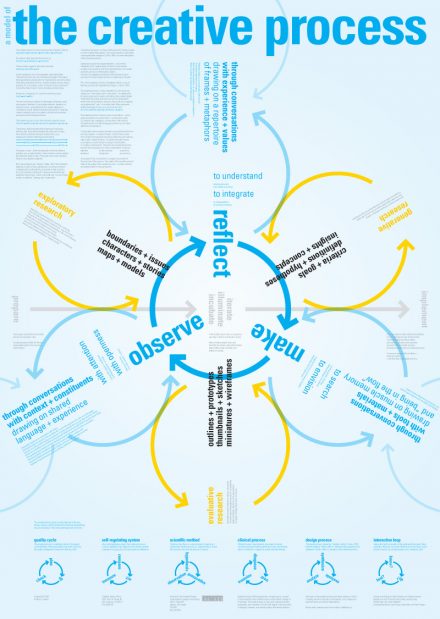
A concept map is a picture of our understanding of something. It is a diagram illustrating how sets of concepts are related. Concept maps are made up of webs of terms (nodes) related by verbs (links) to other terms (nodes). The purpose of a concept map is to represent (on a single visual plane) a person’s mental model of a concept.
At http://www.dubberly.com/concept-maps/creating-concept-maps.html.
http://www.dubberly.com/concept-mapshttp://www.dubberly.com/concept-maps/creative-process.html
http://www.dubberly.com/concept-maps/a-model-of-play.html
http://www.dubberly.com/concept-maps/innovation.html
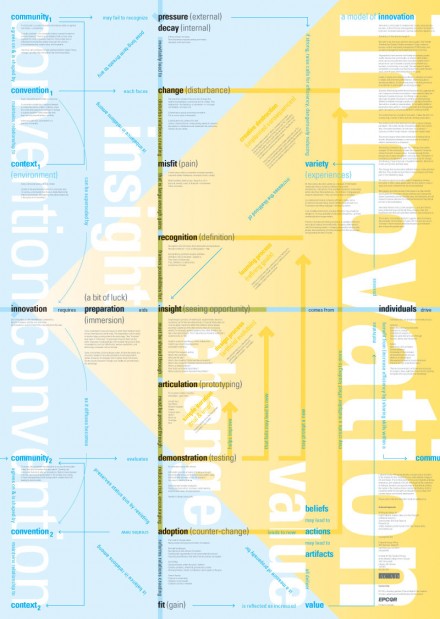
A concept map is a diagram showing the relationships among concepts. It is a graphical tool for organizing and representing knowledge.
[Book] How do you design?
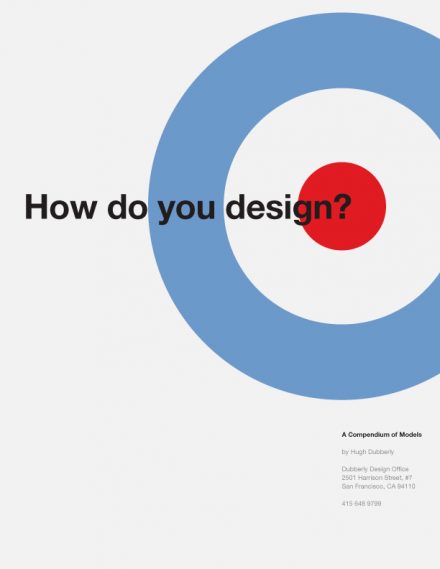
At http://www.dubberly.com/articles/how-do-you-design.html e http://www.dubberly.com/wp-content/uploads/2008/06/ddo_designprocess.pdf.Everyone designs. The teacher arranging desks for a discussion. The entrepreneur planning a business. The team building a rocket.
Their results differ. So do their goals. So do the scales of their projects and the media they use. Even their actions appear quite different. What’s similar is that they are designing. What’s similar are the processes they follow.
Thursday, April 18, 2013
Entrega P01.2
A entrega da proposta de trabalho P01.2 deverá ser efectuada por email, em formato PDF. Caso o ficheiro PDF seja maior que 10Mb recomenda-se que utilizem um serviço de filesharing. Os eventuais anexos poderão ser entregues na aula de segunda-feira (22/04) num CD/DVD devidamente organizado.
Bom trabalho,
pc.
Bom trabalho,
pc.
Tuesday, April 16, 2013
Mindmaps, (visual) brainstorming, action verbs -> blogue
Todos os grupos deverão obrigatoriamente publicar nos seus respetivos blogues os resultados dos exercícios realizados nas últimas aulas.
Bom trabalho,
pc.
Bom trabalho,
pc.
Sunday, April 14, 2013
Brainstorming —> Mindmap —> Blogue
Todos os grupos deverão publicar nos respectivos blogues os mindmaps resultantes do momento de brainstorming que ocorreu na passada aula.
Saturday, April 13, 2013
Friday, April 12, 2013
Atendimento
Hoje das 17:15 às 19:00 estarei disponível para atendimento extraordinário na Fbaup, sala 303, pav Carlos Ramos.
Bom trabalho a todos,
pc.
Bom trabalho a todos,
pc.
News!
Após dedicada ponderação, a entrega da proposta de trabalho 1.2 fica adiada/agendada para o dia 20/04/2013 até às 23:59 horas (em vez de dia 15/04), a fim de permitir que todos os grupos a consigam concluir com maior nível de sucesso.
Na próxima aula, os grupos com os quais não foi possível discutir o projeto terão prioridade no atendimento. Pede-se que preparem com devida antecedência todo o material a ser visionado.
Bom trabalho a todos,
pc.
Na próxima aula, os grupos com os quais não foi possível discutir o projeto terão prioridade no atendimento. Pede-se que preparem com devida antecedência todo o material a ser visionado.
Bom trabalho a todos,
pc.
Wednesday, April 10, 2013

Book: Ideation


Aqui poderão consultar algumas páginas do livro que levei na última aula. Contudo, creio que o poderão fazer na íntegra na Fnac.
Tuesday, April 9, 2013
About Divergent, Convergent, and Lateral Thinking
Psychologists have found that a high IQ alone does not guarantee creativity. Instead, personality traits that promote divergent thinking are more important. Divergent thinking is found among people with personality traits such as nonconformity, curiosity, willingness to take risks, and persistence.
Activities which promote divergent thinking include creating lists of questions, setting aside time for thinking and meditation, brainstorming, subject mapping / "bubble mapping", keeping a journal, creating artwork, and free writing.
At http://en.wikipedia.org/wiki/Divergent_thinking
Convergent thinking is also linked to knowledge as it involves manipulating existing knowledge by means of standard procedures. Knowledge is another important aspect of creativity. It is a source of ideas, suggests pathways to solutions, and provides criteria of effectiveness and novelty.[1] Convergent thinking is used as a tool in creative problem solving.
At http://en.wikipedia.org/wiki/Convergent_thinking
Lateral thinking is solving problems through an indirect and creative approach, using reasoning that is not immediately obvious and involving ideas that may not be obtainable by using only traditional step-by-step logic. (…) [L]ateral thinking deliberately distances itself from standard perceptions of creativity as either "vertical" logic (the classic method for problem solving: working out the solution step-by-step from the given data) or "horizontal" imagination (having a thousand ideas but being unconcerned with the detailed implementation of them).
About Mind Maps, Brainstorming
A mind map is a diagram used to visually outline information. A mind map is often created around a single word or text, placed in the center, to which associated ideas, words and concepts are added. Major categories radiate from a central node, and lesser categories are sub-branches of larger branches. Categories can represent words, ideas, tasks, or other items related to a central key word or idea.
At http://en.wikipedia.org/wiki/Mind_map
Brainstorming is a group or individual creativity technique by which efforts are made to find a conclusion for a specific problem by gathering a list of ideas spontaneously contributed by its member(s). The term was popularized by Alex Faickney Osborn in the 1953 book Applied Imagination. Osborn claimed that brainstorming was more effective than individuals working alone in generating ideas, although more recent research has questioned this conclusion. Today, the term is used as a catch all for all group ideation sessions.
Monday, April 8, 2013
General Guidelines for Conducting Research Interviews
Interviews are particularly useful for getting the story behind a participant's experiences. The interviewer can pursue in-depth information around a topic. Interviews may be useful as follow-up to certain respondents to questionnaires, e.g., to further investigate their responses. Usually open-ended questions are asked during interviews.
Before you start to design your interview questions and process, clearly articulate to yourself what problem or need is to be addressed using the information to be gathered by the interviews. This helps you keep clear focus on the intent of each question.
At http://managementhelp.org/businessresearch/interviews.htm
Basics of Conducting Focus Groups
Focus groups are a powerful means to evaluate services or test new ideas. Basically, focus groups are interviews, but of 6-10 people at the same time in the same group. One can get a great deal of information during a focus group session.
- Preparing for Session
- Developing Questions
- Planning the Session
- Facilitating Session
- Immediately After Session
Sunday, April 7, 2013
Survey —> Email processing habits and user needs
This survey aims to analyze the email processing habits and the current needs with the email.
https://docs.google.com/forms/d/1E6O99ZlSsyLa4J4Nqsi-Y5UjIUd9e6Yv-JrvLEa2JTM/viewform
Visual research methods
Visual data have been of concern to the social sciences in two ways: visual records produced by the investigator, and visual documents produced by those under study. In recent years, however, this dichotomy between the observer and the observed has begun to collapse (as it has across the qualitative social sciences more generally) and a third kind of visual record or "more accurately" representation has emerged: the collaborative representation.
Thus visual anthropology and visual sociology proceed methodologically by making visual representations (studying society by producing images), by examining pre-existing visual representations (studying images for information about society), and by collaborating with social actors in the production of visual representations.
Saturday, April 6, 2013
More on Focus Groups
This article has outlined the main features of focus group research, paying particular attention to the benefits of interaction and group dynamics which only this method can offer. Practical considerations and the time it takes to conduct focus group research may discourage many from attempting to collect data using this method. Nevertheless those who participate in this kind of research often find the experience rewarding. The process of research can be more collaborative than other forms of study, and so focus group research can be an empowering process for participants, and an exciting challenge for social researchers wanting to gain a different perspective on their field of interest.
Tuesday, April 2, 2013
About focus groups
A focus group is a form of qualitative research in which a group of people are asked about their perceptions, opinions, beliefs, and attitudes towards a product, service, concept, advertisement, idea, or packaging. Questions are asked in an interactive group setting where participants are free to talk with other group members. The first focus groups were created at the Bureau of Applied Social Research in the USA, by associate director, sociologist Robert K. Merton. The term itself was coined by psychologist and marketing expert Ernest Dichter.
Sunday, March 31, 2013
"Internet search engines cannot solve all research challenges."
Since design objects do not exist in a vacuum, in addition to exploring the context in which the objects reside, students must evaluate them in terms of effectiveness, consequence, and overall influence on the culture. The results are indeed "object lessons" that serve as building blocks of critical design writing.At http://www.theatlantic.com/health/archive/2011/06/why-google-will-never-beat-old-fashioned-design-research/240566/
P01.2
O enunciado da proposta de trabalho 1.2 encontra-se publicada na respetiva página.
Bom trabalho.
Bom trabalho.
Friday, March 29, 2013
Swoosh! Inside Nike
CNBC’s Darren Rovell takes an unprecedented look inside Nike’s $16 billion empire.
Thursday, March 28, 2013
I Controlled A Video Game With My Mind
I tried Throw Trucks With Your Mind today; Lat Ware is the developer behind the game. I put on a headset in the middle of an expo floor that was buzzing full of people, and I tried my best to move the truck in front of me.
At http://kotaku.com/i-controlled-a-video-game-with-my-mind-461250419
Sunday, March 17, 2013
Grupos de trabalho
PROJECTO 1: NIKE, Just walk!
G1.1
Bárbara Ferreira
Inês Gonçalves
Joana Sousa
Mariana Malhão
G1.2
Ana Catarina Sousa
Carolina Faria
Diana Magalhães
Maria Gonzalez
Maria Inês Freitas
G1.3
Helena Almeida
Rodrigo Galvão
Manuel Ramos
Ivo Torres
PROJECTO 2: SEGA, Dreamcast 2
G2.1
Leonardo Pais
Gustavo Seguro
Mariana Almeida
João Alarcão
G2.2
Marta Novo
Tiago Andrade
Vasco Tudela
Ana Caspão
G2.3
Filipa Alvim de Castro
Marina Pereira
Bruno Nogueira
G2.4
Alexandra Sousa
Filipa Namorado
Joana Neves
João Carreiro
G2.5
Daniela Gomes
Sofia Silva
Sérgio Gomes
G2.6
Jennifer Moleiro
Joana Campos
Sofia de Sousa
Ana Margarida Pereira
G2.7
Rui Rocha
Lus Cepa
Hugo Ferreira
Ana Rita Almeida
G2.8
Helena Mota
Maria Portela
Joana Barros
G2.9
Bruno Miguel Dias Pacheco
Paulo Guilherme Souva Barrios
Mónica Sofia Bico Correia
G2.10 - "Gato Gordo"
Ana Filipa Ferreira
Arthur Silveira de Veras
Sofia Santos
Telma Ferreira
Zita Moura
PROJECTO 3: IPST, Poster + Kit Doador
G3.1
Carla Guedes
Vanessa Carvalho
Catarina Queirós
G3.2
Sílvia Raquel Cerqueira
Maria Fernandes
Maria Inês Lobo
Marta Sofia Graça
G1.1
Bárbara Ferreira
Inês Gonçalves
Joana Sousa
Mariana Malhão
G1.2
Ana Catarina Sousa
Carolina Faria
Diana Magalhães
Maria Gonzalez
Maria Inês Freitas
G1.3
Helena Almeida
Rodrigo Galvão
Manuel Ramos
Ivo Torres
PROJECTO 2: SEGA, Dreamcast 2
G2.1
Leonardo Pais
Gustavo Seguro
Mariana Almeida
João Alarcão
G2.2
Marta Novo
Tiago Andrade
Vasco Tudela
Ana Caspão
G2.3
Filipa Alvim de Castro
Marina Pereira
Bruno Nogueira
G2.4
Alexandra Sousa
Filipa Namorado
Joana Neves
João Carreiro
G2.5
Daniela Gomes
Sofia Silva
Sérgio Gomes
G2.6
Jennifer Moleiro
Joana Campos
Sofia de Sousa
Ana Margarida Pereira
G2.7
Rui Rocha
Lus Cepa
Hugo Ferreira
Ana Rita Almeida
G2.8
Helena Mota
Maria Portela
Joana Barros
G2.9
Bruno Miguel Dias Pacheco
Paulo Guilherme Souva Barrios
Mónica Sofia Bico Correia
G2.10 - "Gato Gordo"
Ana Filipa Ferreira
Arthur Silveira de Veras
Sofia Santos
Telma Ferreira
Zita Moura
PROJECTO 3: IPST, Poster + Kit Doador
G3.1
Carla Guedes
Vanessa Carvalho
Catarina Queirós
G3.2
Sílvia Raquel Cerqueira
Maria Fernandes
Maria Inês Lobo
Marta Sofia Graça
Monday, March 11, 2013
Shaping Belief: The role of audience in visual communication
The designer, of course, cannot combine just any set of beliefs with a subject to reach the communication goal. Communication is directed toward a specific audience and that audience comes to the argument with particular cultural beliefs and understanding.At TYLER, Ann C., Shaping Belief: The role of audience in visual communication, 1992.
Friday, March 8, 2013
More on design briefs
Your design can only be as good as the brief you worked from. The best projects are borne from creative briefs that are open enough to inspire ideas, while being specific enough to feel workable.
At http://freelanceswitch.com/clients/the-ultimate-design-brief/
As a designer it is important to have a template such as this one to give to clients as clients will not always come to you with a design brief – feel free to use this one as you please. By having a template ready, it shows them your professionalism and ultimately saves them (and you) a lot of time and money.
At http://justcreative.com/2008/09/26/how-to-write-an-effective-design-brief/
How do you write a design brief?—David Airey

Any graphic design project needs a detailed design brief. There are two main reasons:
- It ensures the client knows exactly what s/he wants to achieve from the project.
- It acts as a point of reference for designers, forming the focus of their work.
At http://www.davidairey.com/how-do-you-write-a-graphic-design-brief/
Thursday, March 7, 2013
Tuesday, March 5, 2013
7 Basics to Create a Good Design Brief
At http://www.webdesignerdepot.com/2011/03/7-basics-to-create-a-good-design-brief/.The design brief serves as the guiding document for the project. Think of it as like a business plan for a specific project. It should cover everything necessary to the project, in a manner that is easy to refer to throughout the project timeline.
Make notes on your design briefs once you start the project. Keep your proposal along with it, as well as other important documents. Highlight the important parts of each, or make notes in the margins. Don’t just look it over at the beginning and then file it away somewhere. Effectively using a design brief throughout the process can result in a much better end result.
Sunday, March 3, 2013
OUYA

The Ouya (pronounced /ˈuːˌjə/ OOO-yah; stylized "OUYA")[4] is an upcoming video game console running its own version of the Android operating system. (…) The console's hardware design will allow it to be easily opened up, requiring only a standard screwdriver to allow easy modding and possible hardware addons.At http://en.wikipedia.org/wiki/Ouya.
63,416 Backers.
$8,596,474 pledged of $950,000 goal
At http://www.kickstarter.com/projects/ouya/ouya-a-new-kind-of-video-game-console.
http://kotaku.com/5933174/ouyas-ridiculously-successful-kickstarter-ends-with-millions-in-the-bank
http://www.ouya.tv
Sunday, February 24, 2013
Graphic Design: Fine Art or Social Science
Graphic designers are always in need of active dialogue with their clients and with other professionals (…) to really make the best of their practice. This certainly has important implications in relation to the evaluation of graphic design quality and to the education of graphic designers.At FRASCARA, Jorge; Graphic Design: Fine Art or Social Science; 1988.
Monday, February 18, 2013
Better Skills through Better Research
Research is not, however, some pedagogic make-work or punishment. It is rather a necessary dimension in undergraduate and graduate programs. (…) Nonetheless, research in the design discipline has also traditionally been something of a bugaboo. While appreciating its value in certain circumstances, designers realize it has proven to be double-edged sword. (…) The fact is graphic design, indeed all design, is not produced in a vacuum. If the correct structures are in place, outside influences must be considered and also prevail.At HELLER, Steven; Better Skills through Better Research; 2006.
Subscribe to:
Posts (Atom)